

Close
CART (0)
Field Notes · Sportsman
A good rifle case does three things: it holds the rifle still, it keeps weather and grit off it, and it survives being thrown in a truck bed for twenty seasons. For hunting and range work, a lined soft case is the right tool. For flying, you are legally required to use a locking hard case. Before you buy anything, measure your rifle from muzzle to the end of the stock and add two inches, then check the case will clear your scope.
Most rifle case advice online is written by people who have never had to carry one up a ridge in the dark. It tells you to consider your needs and compare your options, which is another way of saying nothing at all.
It also skips the question most people are actually asking, which is not how to pick a case but whether there is any real difference between the forty dollar one on the wall at the sporting goods store and the one that costs fifteen times as much. There is. It is not the padding and it is not the branding, and it takes about four years of ownership to become obvious.
Here is what actually matters, in the order it matters, from someone who has been building these for a living since 2009.
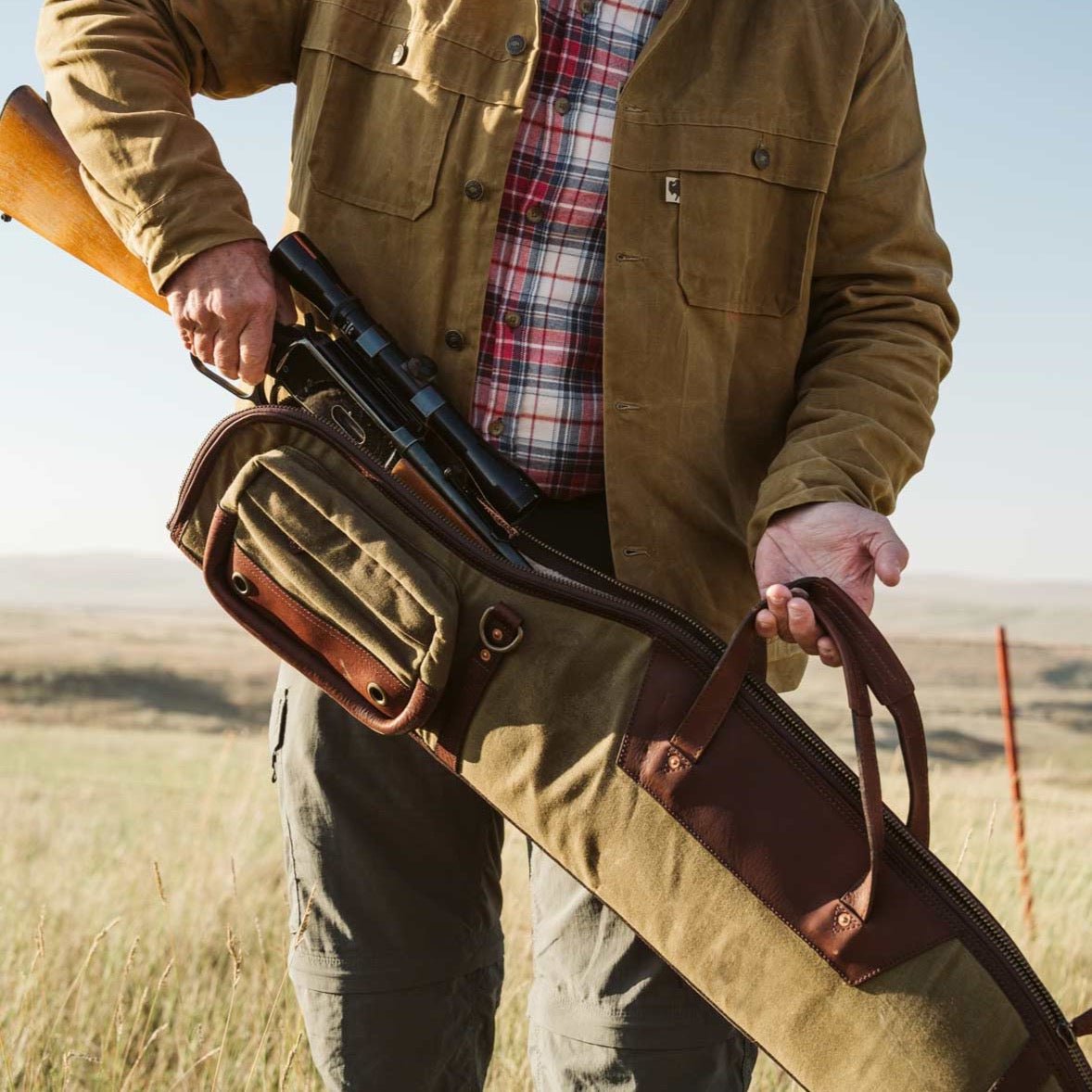
People search for all three and mean much the same object, which makes shopping for one harder than it needs to be.
A rifle bag or rifle sleeve almost always means a soft case the rifle slides into. A rifle case can mean that, or it can mean a hard locking box, depending on who is talking. Tactical and range shooters tend to say bag. Hunters tend to say case. The British trade says slip, and means a soft one.
Everything below is about soft cases, whichever of those words you use for them. Where the distinction genuinely matters, which is hard versus soft, it is called out plainly.
Five things. Everything else is decoration.
It immobilizes the rifle. A rifle that slides and rattles inside its case is a rifle that arrives with a shifted zero and a scratched stock. The case should fit closely enough that the gun stays put when you tip it end over end.
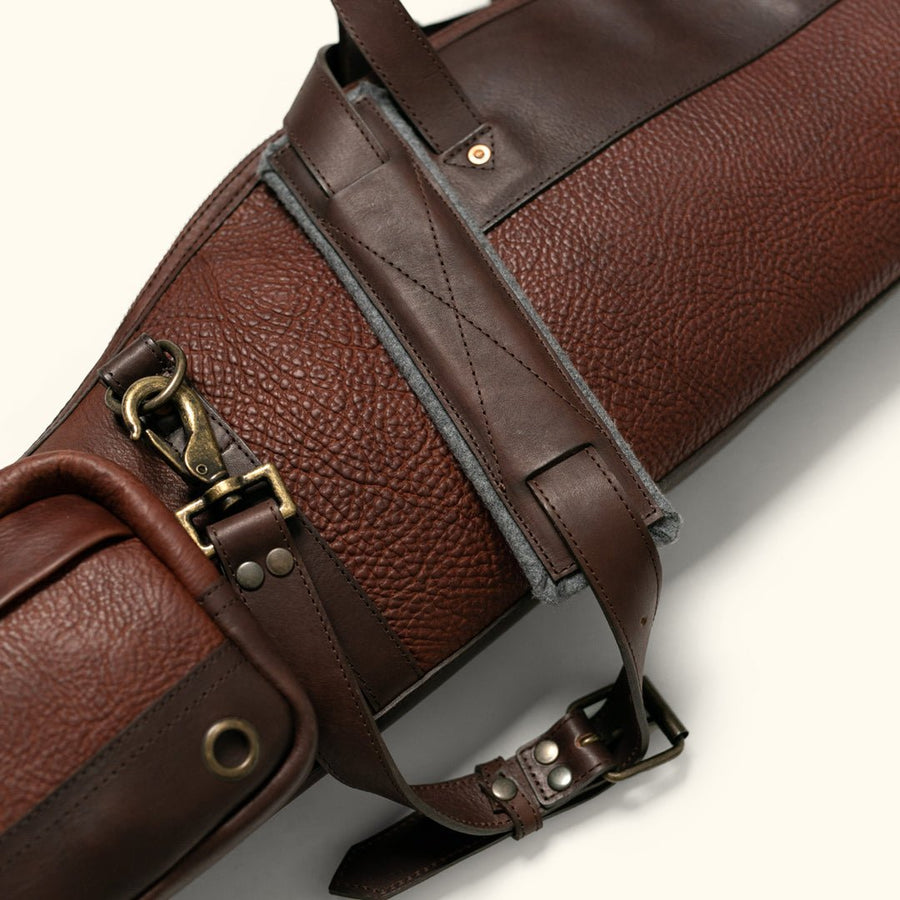
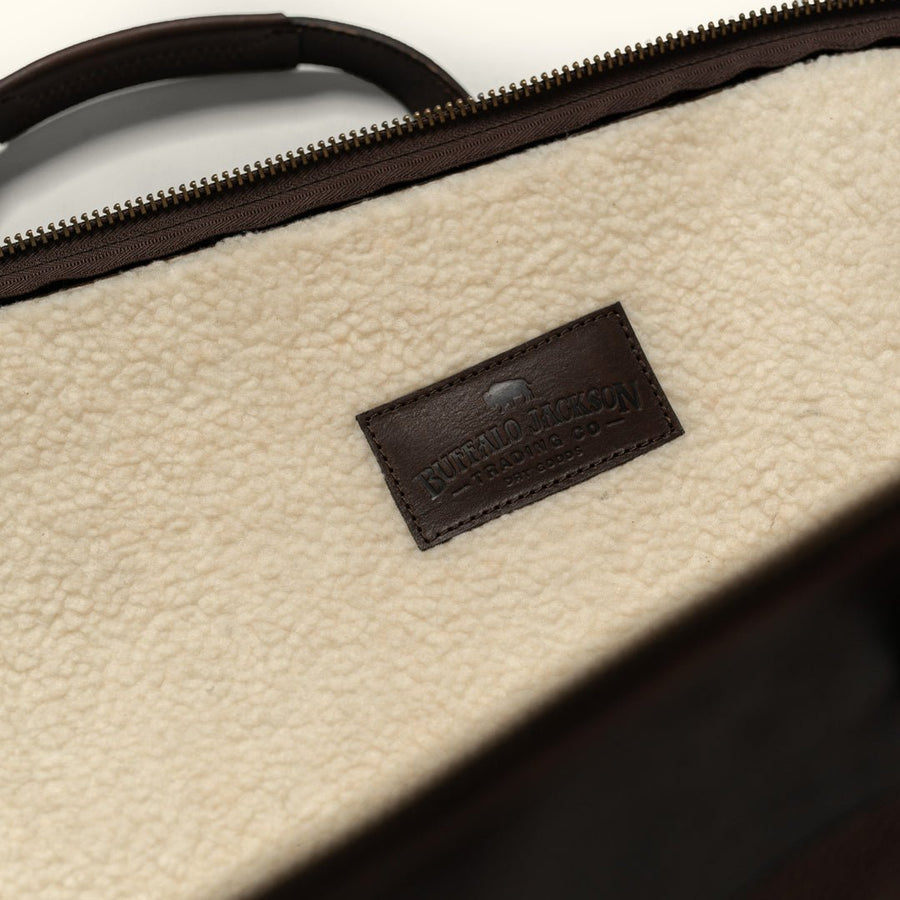
The lining is soft and the lining is dry. The interior is the only part of the case that touches your rifle. Sherpa, shearling, or a heavy brushed pile will cushion the finish and wick moisture away from the metal. A slick nylon lining does neither.
The hardware outlives the fabric. Zippers fail before leather does. Every single time. Cheap cases use cheap zippers, and a zipper that splits in the field turns a case into a bag.
The stress points are reinforced. Strap anchors, handle roots, and the corners at the muzzle end take all the load. If they are stitched and nothing else, they will let go. Rivets, bar tacks, or backing leather at those points is the difference between ten years and forty.
It is the right length. More rifle cases are returned for fit than for any other reason. We will come back to this, because it is the part people get wrong.
This is the first real decision, and it is decided almost entirely by how the rifle travels.
If you are getting on an aeroplane, the question is closed. Federal rules require firearms to be transported in a locked, hard-sided container in checked baggage. A soft case, however well made, is not legal for that and never will be. Buy a hard case for the flight.
For everything else, which is to say for most of the shooting most of us do, a soft case is the better instrument. It is lighter, it is quieter, it does not take up the whole back seat, and you can sling it across your back and still have both hands free.
| Soft case | Hard case | |
|---|---|---|
| Air travel | Not permitted | Required, must lock |
| Truck, ATV, horseback | Best choice | Bulky, slides around |
| Carrying on foot | Sling it and walk | Awkward past a hundred yards |
| Impact protection | Moderate | High |
| Weather | Water resistant | Sealed |
| Long-term storage | No. Air needs to move. | No. Traps moisture. |
| Weight, empty | 4 to 5 lb | 9 to 15 lb |
| Quiet in the field | Silent | Latches and echo |
Neither one is a gun safe. A case is for moving a rifle, not for keeping it. Leave a gun sealed in any case for a season and you are asking condensation to sit against the metal with nowhere to go. Store rifles in a safe or a cabinet where air can circulate, and use the case to get them from there to the field and back.
Here is where most people go wrong, and it costs them a return.
Measure the rifle from the muzzle to the rearmost point of the buttstock, with the stock fully extended if it adjusts. Then add two inches. That is your minimum case length. The extra two inches is not padding for the sake of it; it stops the muzzle crown from riding against the end of the case every time you set it down.
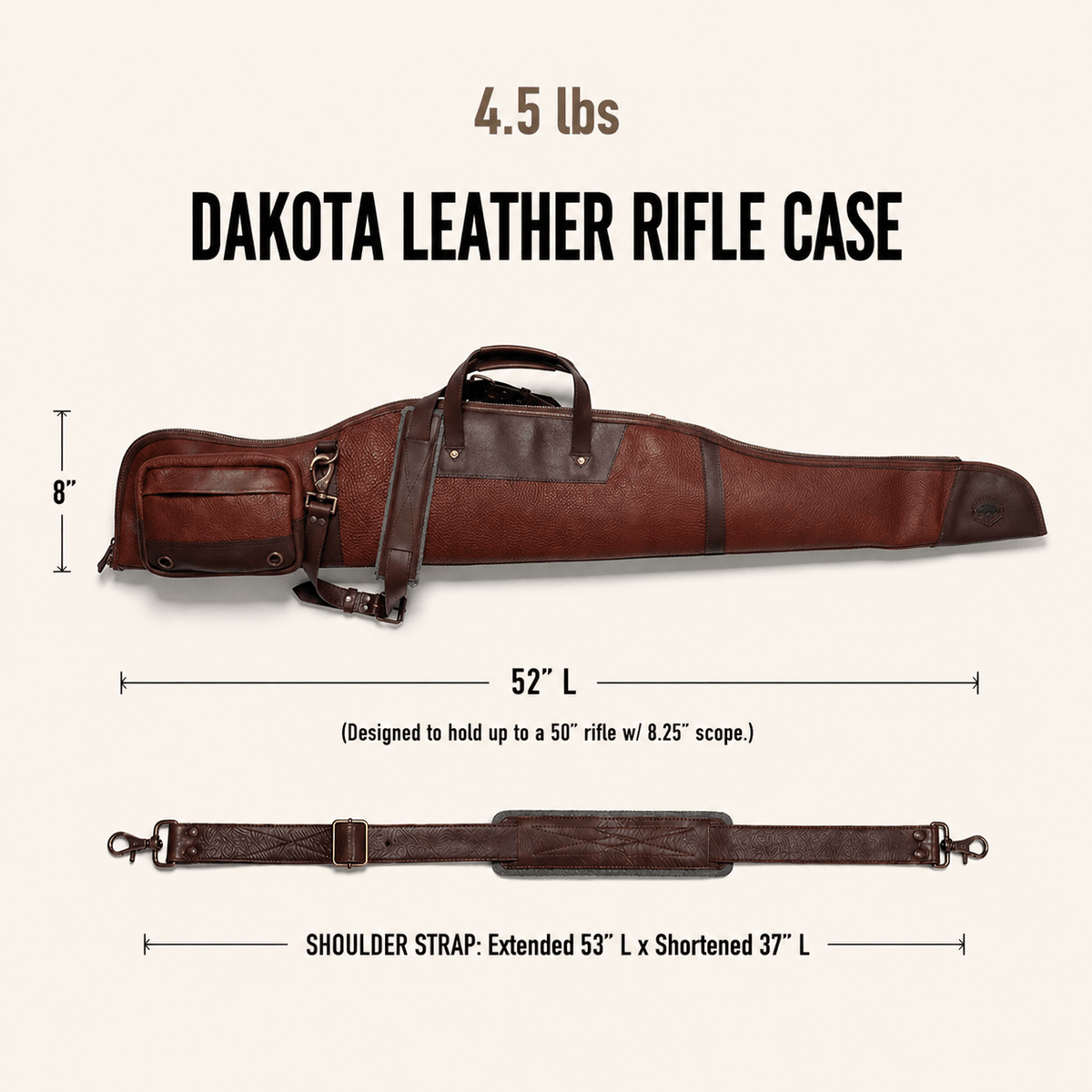
Our Dakota rifle cases are built to a 52 inch shell, which takes a rifle up to 50 inches overall. That covers the great majority of hunting rifles.
In practice, that shell swallows a Remington 700, a Tikka T3, a Ruger American, most lever actions including the common Marlin and Henry configurations, and a standard AR-15 with a 16 inch barrel.
Where you need to stop and measure twice:
Length is the measurement everybody takes. Height is the one that sinks them.
A scoped rifle is not a flat object. The turret housing and the objective bell sit well above the receiver, and a case cut for iron sights will not zip over them. This is the single most common reason a case that is long enough still does not work.
The Dakota cases carry 9.25 inches of exterior height and will clear a mounted scope up to 8.25 inches at its tallest point, measured from the bottom of the stock straight up through the top of the turret. That accommodates ordinary hunting optics on standard or medium rings without taking the glass off.
If you are running a 56mm objective on high rings over a tall comb, measure it. Take a straightedge, lay it across the bottom of the stock, and measure vertically to the highest point on the scope. That number, not the scope's advertised specs, is what has to fit.
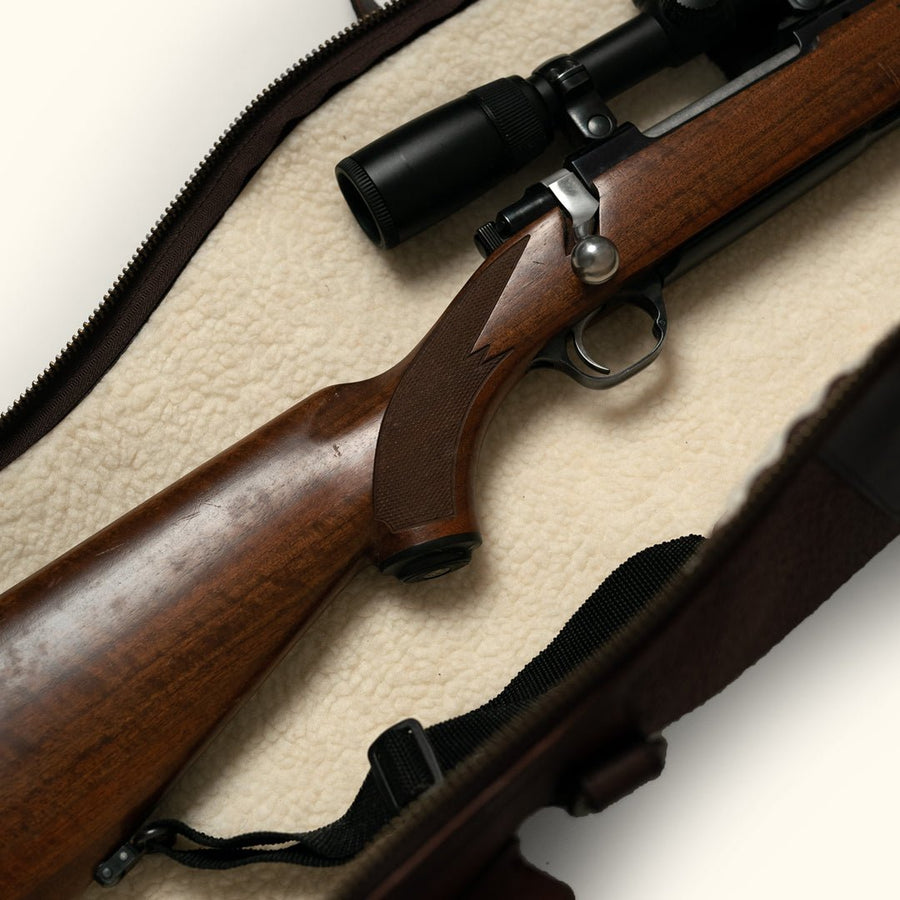
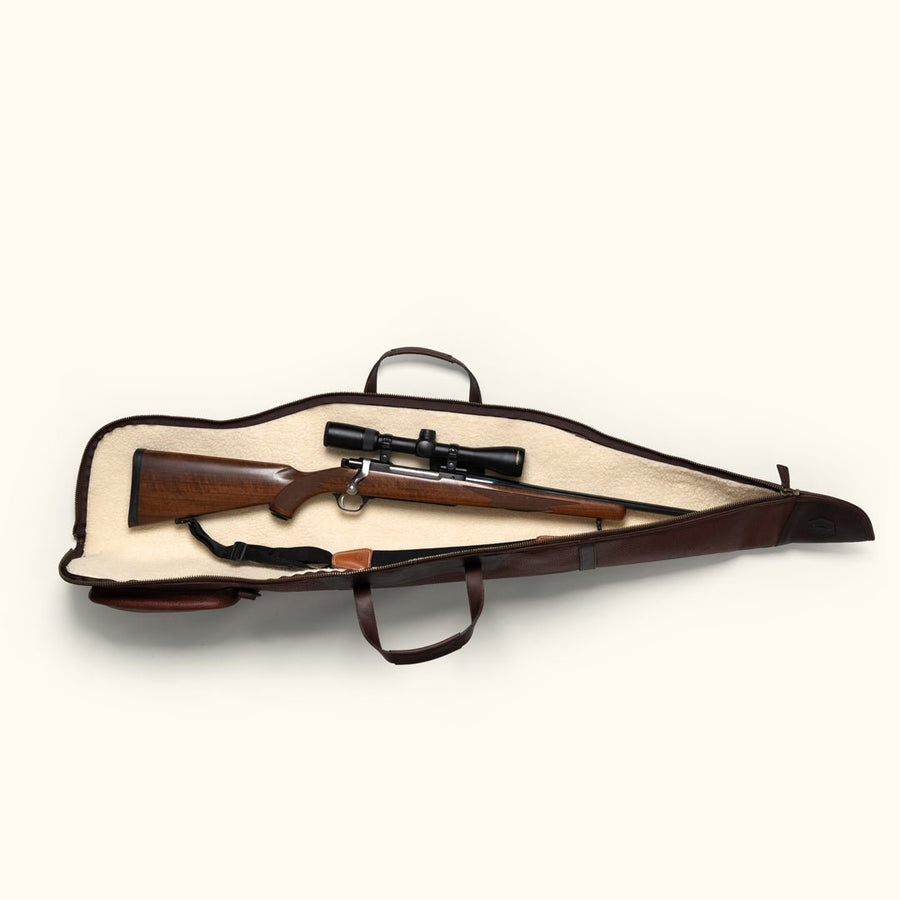
The wall of rifle cases at any sporting goods store is mostly one object wearing different logos. Six hundred denier polyester with a polyurethane backing, a slab of closed-cell foam inside, a coil zipper nobody will name, and a webbing strap stitched to the shell. Forty-five dollars. And it works.
It works for about three seasons. Then one of four things happens, and in my experience it is always one of these four.
None of that is a scandal. It is a forty-five dollar case behaving exactly like a forty-five dollar case, and it is honest about what it is. The real question is whether you want to make that purchase once every three years for the rest of your shooting life.
| Synthetic soft case | Waxed canvas & leather | Full grain leather | |
|---|---|---|---|
| Typical price | $30 to $60 | $400 to $500 | $600 to $900 |
| Shell | 600D polyester, PU backed | 18 oz waxed cotton, leather trim | Full grain hide, single layer |
| Lining | Thin nylon over foam | Sherpa pile | Sherpa pile |
| Hardware | Unbranded coil zip, sewn webbing | Branded zip, riveted leather anchors | Branded zip, riveted leather anchors |
| Realistic service life | 2 to 4 seasons | 15 to 25 years, re-waxed | A lifetime, conditioned |
| How it fails | Zipper, foam, tacky backing, strap | Wax wears thin. Renewable. | Rarely. Zipper is replaceable. |
| Worth repairing | No | Yes | Yes, indefinitely |
| At twenty years | Long gone, four times over | Faded, waxed, still working | Darker than the day you bought it |
Say you have another forty years of shooting in you. A synthetic case at forty-five dollars, replaced every third season, is fourteen cases and something close to six hundred and thirty dollars. A full grain leather case at six hundred and fifty, conditioned once a year and kept out of the damp, is one case.
The money lands in roughly the same place. What differs is what is in your hands at the end of it. In one version you own a case you bought last spring. In the other you own an object with forty years of colour in it that your son has already decided is his.
That is the entire argument for spending the money, and I would rather put it plainly than dress it up. If a case is a consumable to you, buy the consumable. It will protect your rifle. It simply will not become anything.
Full grain leather is heavier, stiffer for the first season, and holds its shape. It takes a scuff and turns it into patina rather than damage. It is the one you buy if you intend to hand it to somebody.
Waxed canvas with leather trim is lighter and sheds rain better from new. The wax wears thin at the rub points and you renew it rather than replace the case. It is the honest working choice for a rifle that lives in a truck.
Neither is waterproof, and any maker who tells you otherwise is selling. Water resistant means a walk in the rain. It does not mean a night left out in a downpour.
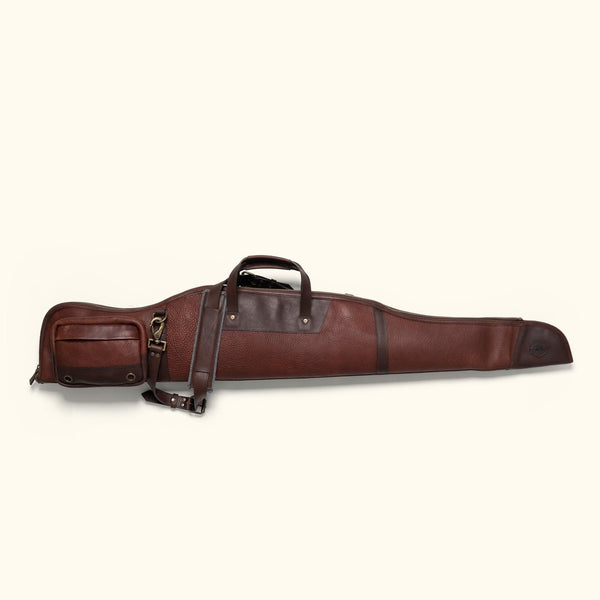
Full grain leather, sherpa lined, antique brass YKK zippers and copper rivets. Detachable all-leather sling. Built in León, Mexico. $649.95
See the leather case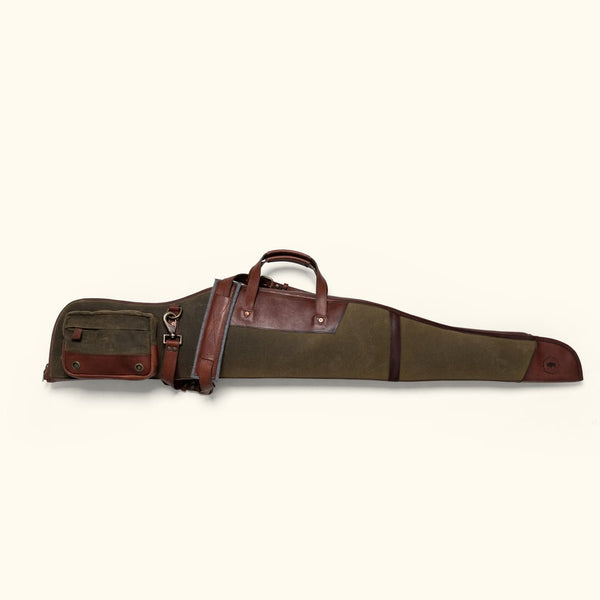
18 oz waxed cotton canvas with full grain leather trim, sherpa lined, same 52 inch shell. Lighter, and it sheds rain. $479.95
See the waxed canvas caseYou will not get to hold it first if you are buying online, so read the specification like a suspicious man.
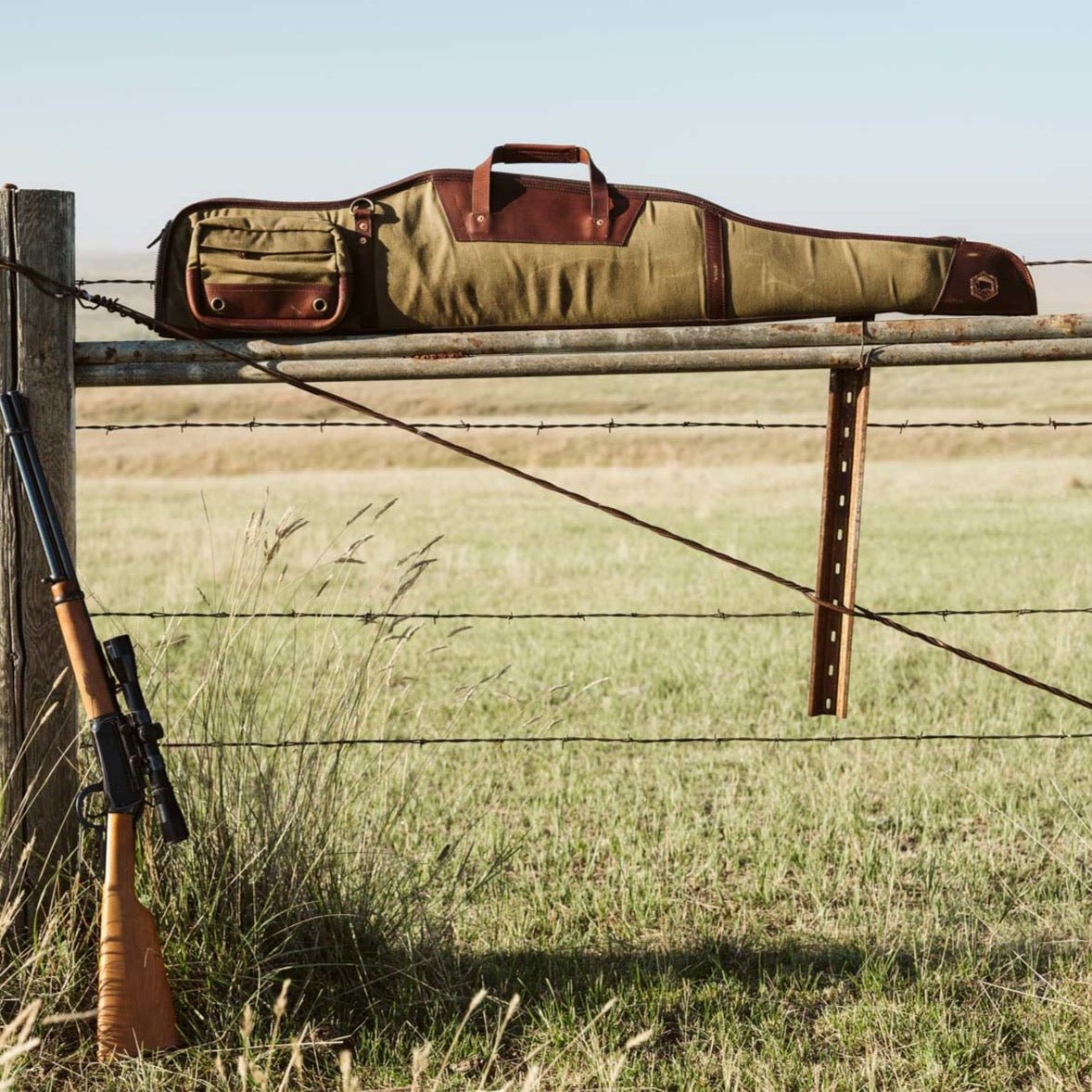
A rifle case spends most of its working life somewhere other than in your hands.
It sits in the rack at the club. It rides in the back of the truck at the tailgate where four other men are standing around it. It leans in the corner of a lodge, gets set on a bench at the range next to somebody else's, and eventually gets handed across a room to somebody who is being given something.
In all of those places it is being read, whether anybody says so or not. A rifle is a serious object and people notice what it arrives in. That is not vanity, it is the same instinct that makes a man clean a gun he is about to lend.
Leather is the only one of these materials that improves under that scrutiny. Synthetic shells wear out and look worn out. Waxed canvas fades handsomely and is renewed. Full grain leather does the thing nothing else does, which is to darken and settle and take on the marks of where it has been, until it looks like it was always yours.
Twenty years in, a good leather case is not a piece of equipment any more. It is part of the gun.
Very little, and rarely, is the honest answer.
Wipe the case down with a dry cloth when it comes in dirty. If it is wet, let it dry away from heat, never on a radiator or in front of a fire, which will cook leather and stiffen it permanently. Once or twice a year, work a quality conditioner into the leather with your hands.
For waxed canvas, do not wash it. Brush the dirt off with a stiff brush and cold water, and re-wax the panels when they start going pale at the edges and stop beading.
Leave the rifle out of the case between trips. Both the case and the rifle keep better that way.
Measure from the muzzle to the rearmost point of the buttstock with the stock fully extended, then add two inches. That is your minimum. A 52 inch case takes a rifle up to 50 inches overall, which covers most bolt actions, most lever actions, and a standard AR-15 with a 16 inch barrel.
It depends on the case height, not the length. Measure from the bottom of the stock straight up to the highest point of the mounted scope. The Dakota cases clear up to 8.25 inches, which handles ordinary hunting optics on standard or medium rings. Large objective bells on high rings need checking first.
No. Firearms must travel in checked baggage inside a locked, hard-sided container. A soft case will not satisfy that requirement regardless of how it is built. Use a hard case for the flight and a soft case at the other end.
Yes, for long periods. Any closed case restricts airflow, and trapped humidity against steel is how rust starts. Cases are for transport. Store rifles in a safe or cabinet where air can move, and keep the case for the journey.
No. Full grain leather and waxed canvas are both water resistant, which means they will see you through rain and wet grass. Neither is sealed. If a case is going to be submerged or left out in weather for hours, you want a hard case with a gasket.
It depends on what you are protecting and for how long. A cheap case protects a rifle for a season or two, then the zipper goes. A well-built leather or waxed canvas case, kept out of the damp and conditioned occasionally, will outlast the person who bought it. If the rifle is one you intend to pass on, the case should be built to the same standard.
In practice, very little. A rifle bag or rifle sleeve almost always means a soft case the rifle slides into. A rifle case can mean the same thing or a hard locking box, depending on who is speaking. Tactical and range shooters tend to say bag, hunters tend to say case, and the British trade says slip. The distinction that actually matters is soft versus hard, not which word is used.
For protection over a weekend, the difference is small. Over a decade it is total. Synthetic cases fail predictably at the zipper, the foam and the sewn strap tabs, and they are not worth repairing when they do. A full grain leather case has replaceable hardware, riveted strap anchors and a shell that does not degrade, so it can be maintained indefinitely. You are not buying better protection. You are buying a case you only buy once.
Most of it is material and labour. A 52 inch case takes a large area of full grain hide with no flaws in it, which is the most expensive part of any skin, plus a sherpa lining, branded hardware and riveted stress points. It is cut and stitched by hand rather than run through automated synthetic assembly. Spread across the life of the case the cost per year is comparable to replacing a cheap case every few seasons, with an object left at the end of it.
A soft, absorbent pile such as sherpa or shearling. It cushions the stock and bluing, and it pulls moisture off the metal rather than holding it against the surface. Slick synthetic linings do neither job well.
In the exterior pocket, for transport, yes. Check your state and local rules, which vary considerably on how firearms and ammunition may be carried together in a vehicle. Do not leave ammunition in the case in storage.
Xan Hood founded Buffalo Jackson Trading Co. in 2009 and has spent the years since working with leather makers in Mexico and India on bags, outerwear and sporting goods. He writes about how the things we carry are actually made.


